
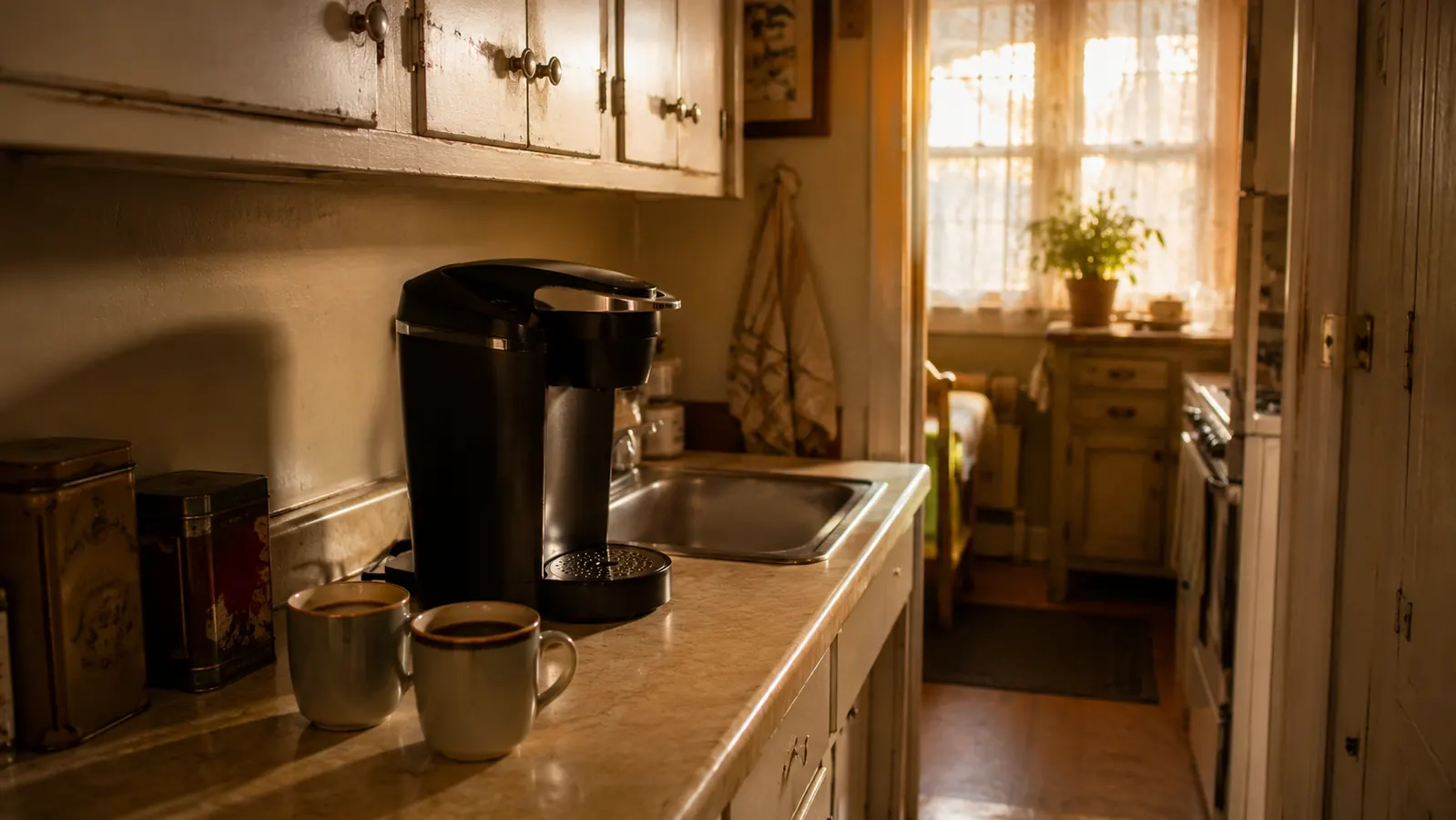
The Keurig K-Classic showed up in my kitchen because of a Tuesday night argument that was not really an argument, more like the same tired conversation Paul and I had been having for months about coffee. He likes it strong, black, gone in ten minutes before he is out the door by six-thirty. I like mine weaker, with milk, sipped slowly over half an hour while I actually wake up. We had been running both of those habits through one twelve-cup drip pot, and the math had never once worked in either of our favor.
Here is what that looked like most mornings before the Keurig K-Classic. I would set the drip pot the night before, because Paul needed coffee ready the second he came downstairs. It would brew a full pot, twelve cups, for two people, one of whom was leaving in ten minutes and one of whom would drink maybe a mug and a half over the next hour. By nine o'clock, more than half of that pot was still sitting on the burner, going from hot to bitter to something I eventually just poured down the sink so I could rinse the carafe. That happened almost every single day. Not most days. Almost every day.
I want to be honest about how small this problem sounds when I write it out. Nobody's morning was ruined by a half-full pot of stale coffee. But it was the kind of small, repeated waste that started to bother me more than it should have, the sound of coffee going down the drain while I was scrubbing a carafe I did not even want to use that day. When I finally looked up single-serve machines, the Keurig K-Classic kept coming up as the one built for exactly our situation, two people who drink coffee differently and leave the kitchen at different times.
It was never really about the coffee. It was about not pouring half a pot down the sink before eight in the morning.
Tired of brewing a full pot for two people who don't drink it the same way?
The Keurig K-Classic brews one cup at a time, hot and ready in under ninety seconds, so nobody is waiting on a pot and nothing gets poured out. See today's price and current availability on Amazon.
Amazon Check Today's Price on Amazon →I will admit I hesitated before buying it, mostly because of where it would live. My galley kitchen has twenty-two inches of usable counter beside the sink, and the Keurig K-Classic is not a small machine. It needed a permanent six inches of that strip and headroom above it to lift the lid, which meant giving up space I had been using for a cutting board. I stood there for a minute doing the math on whether a coffee maker deserved that much of my twenty-two inches. I decided it did, but I want to say plainly that it was a real tradeoff, not a free upgrade.
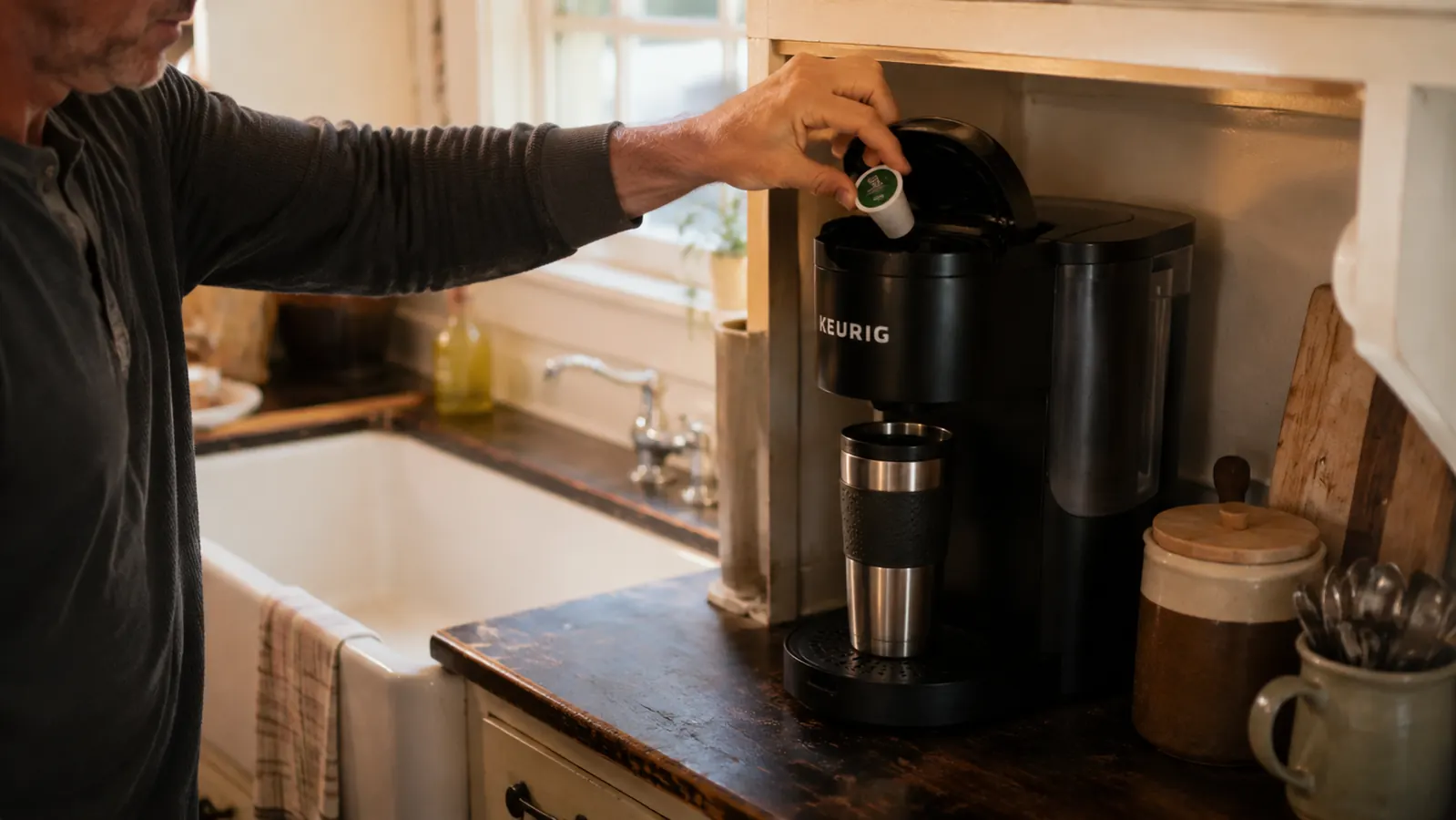
The first week changed more than I expected. Paul would come down, drop a bold roast pod into the Keurig, hit the 8-ounce button, and be walking out the door with a full hot mug in under two minutes. No waiting on a carafe, no burning his mouth on coffee that had been sitting since 5:45. I would come down later, brew my own K-Cup at the 10-ounce setting with milk stirred in, and never once was I drinking coffee that had been reheated or left to go lukewarm on a burner. We were finally each getting coffee that matched how we actually drink it, at the moment we actually wanted it.
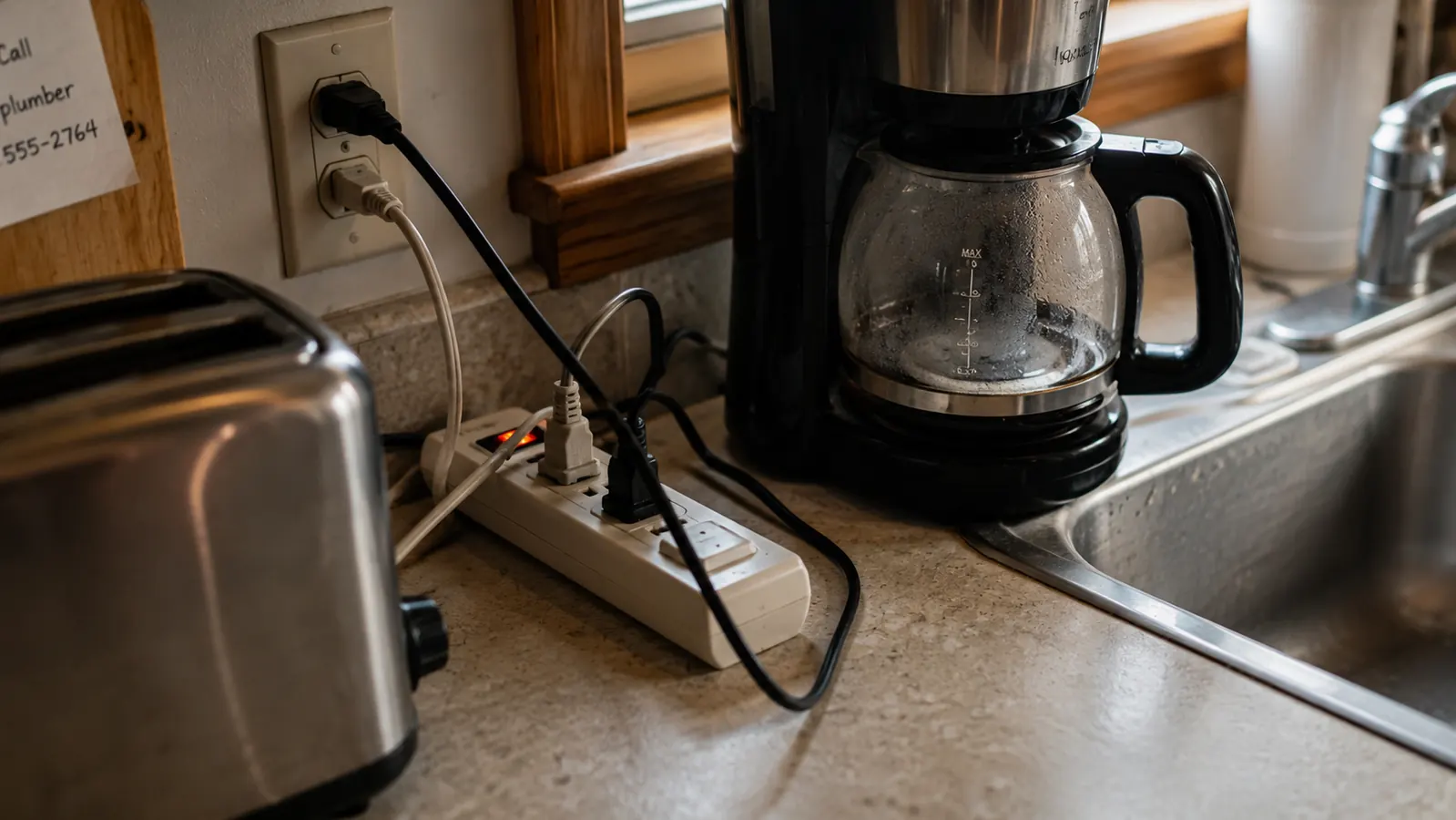
The outlet became its own small negotiation. Our one outlet cluster beside the sink already had the toaster plugged into it, and now the Keurig needed a spot too. Some mornings that means Paul is toasting bread while I am waiting for my coffee to finish, and we have learned to just take turns rather than try to run both off the same strip at once. It is a minor annoyance, and I would rather deal with it daily than go back to pouring coffee out.

By Sunday night I have gotten into the habit of filling the Keurig's 48-ounce reservoir before bed, which usually carries us both through most of the week without a refill. Around the four-month mark, the brew cycle started running slower and sounding a little louder, so I descaled it with a store-bought solution, and the Keurig went right back to brewing in under ninety seconds, quiet again. It was not hard, just one task I had to learn was part of owning the machine rather than a sign something was wrong.
The part I do not want to gloss over is cost. K-Cups run more per cup than the ground coffee we used to buy for the drip pot, by a noticeable margin over a full year of daily brewing. I have made peace with that because we are no longer throwing coffee away, but if you compare it dollar for dollar against a bag of ground coffee, the pods lose that comparison every time. I read the full breakdown in the six-month review before I bought, and it matched what I have seen firsthand since.
What I'd Tell You If We Were Sitting at My Kitchen Table
If you asked me over coffee, actual Keurig coffee, whether it was worth it, I would tell you the truth. It costs more per cup, it takes a permanent chunk of counter you cannot easily reclaim, and it is one more cord fighting for the same outlet. But it solved a problem the drip pot never could, which is that two people rarely want the same coffee at the same time. If that sounds like your kitchen too, I would look at the Keurig K-Classic before you buy anything else, and if you want to see how it stacks up against a pod machine on the other end of the price and flavor spectrum, I compared it directly to a Nespresso in that side-by-side breakdown. It is not a perfect machine. It is just the one that finally matched how Paul and I actually drink coffee.
Two coffee habits, one machine that finally fits both.
If your household drinks coffee differently too, check the Keurig K-Classic's current price and availability on Amazon.
Amazon Check Today's Price on Amazon →