
Every glowing Keurig K-Classic review I read before I bought mine skipped four things I wish someone had told me straight: what a pod actually costs against a bag of ground coffee, where the used pods end up, how weak the coffee gets once you ask for more than six ounces of it, and that the machine expects maintenance you were never warned about at checkout. I bought the Keurig anyway, and I still recommend it, but only with the parts nobody puts in the marketing copy attached. This is that version of the review, the one that tells you what you are actually signing up for before you clear space for it on your own counter.
I am not new to this machine. I have owned it long enough to get past the honeymoon phase, past the point where a shiny new appliance gets a pass just for being new. What follows is the skeptic's pass at the Keurig K-Classic, the questions I asked myself before I would tell a friend to buy one, not the questions a press release answers. If you want the fuller day-to-day story, I wrote that version too. This one is narrower on purpose. It exists to answer a single question honestly: knowing everything I know now, would I still hand over counter space to it? Mostly yes, with real caveats attached, and I would rather you hear the caveats from me than discover them three weeks after your own machine is already sitting on your counter.
The Quick Verdict
A genuinely convenient machine with a real cost premium, a real waste problem, and a real ceiling on how strong your coffee can get.
Amazon Check Today's Price →Before you buy a Keurig, know exactly what you're trading for the convenience.
The honest version: faster mornings and less cleanup, in exchange for a higher cost per cup and a strength ceiling on the bigger brew sizes. See today's price and current availability on Amazon.
Amazon Check Today's Price on Amazon →How I Tested This, Skeptically
I ran the Keurig side by side against the ground coffee and drip pot I used to rely on, on purpose, instead of just switching over and forgetting the comparison. I tracked what a box of pods actually worked out to per cup against what the same amount of ground coffee cost by the pound, I saved a week's worth of used pods in a bag on top of the fridge instead of tossing them straight in the trash so I could actually look at the pile, and I paid attention to which brew size I reached for out of habit versus which one I reached for because I genuinely wanted a bigger cup.
I also brought in a second opinion. My husband Paul drinks his coffee black, strong, and in a mug big enough to embarrass most people, and he is exactly the kind of drinker who exposes a single-serve pod machine's weak points fastest. If the Keurig K-Classic was going to disappoint anyone in this kitchen, it was going to be him first, and I wanted that reaction on the record before I decided whether to recommend the machine to someone with his taste.
I gave myself a full month before writing a word of this, on purpose, because a week is long enough to fall for a new appliance and not long enough to actually catalog its problems. A month meant running out of the first box of pods and having to decide, with my own money, whether to buy another box of the same brand or switch to something cheaper. It meant descaling questions coming up naturally instead of me going looking for them. It meant enough repetition that the annoyances stopped being novel and started being real data.
The Pod Math Nobody Runs Before They Buy
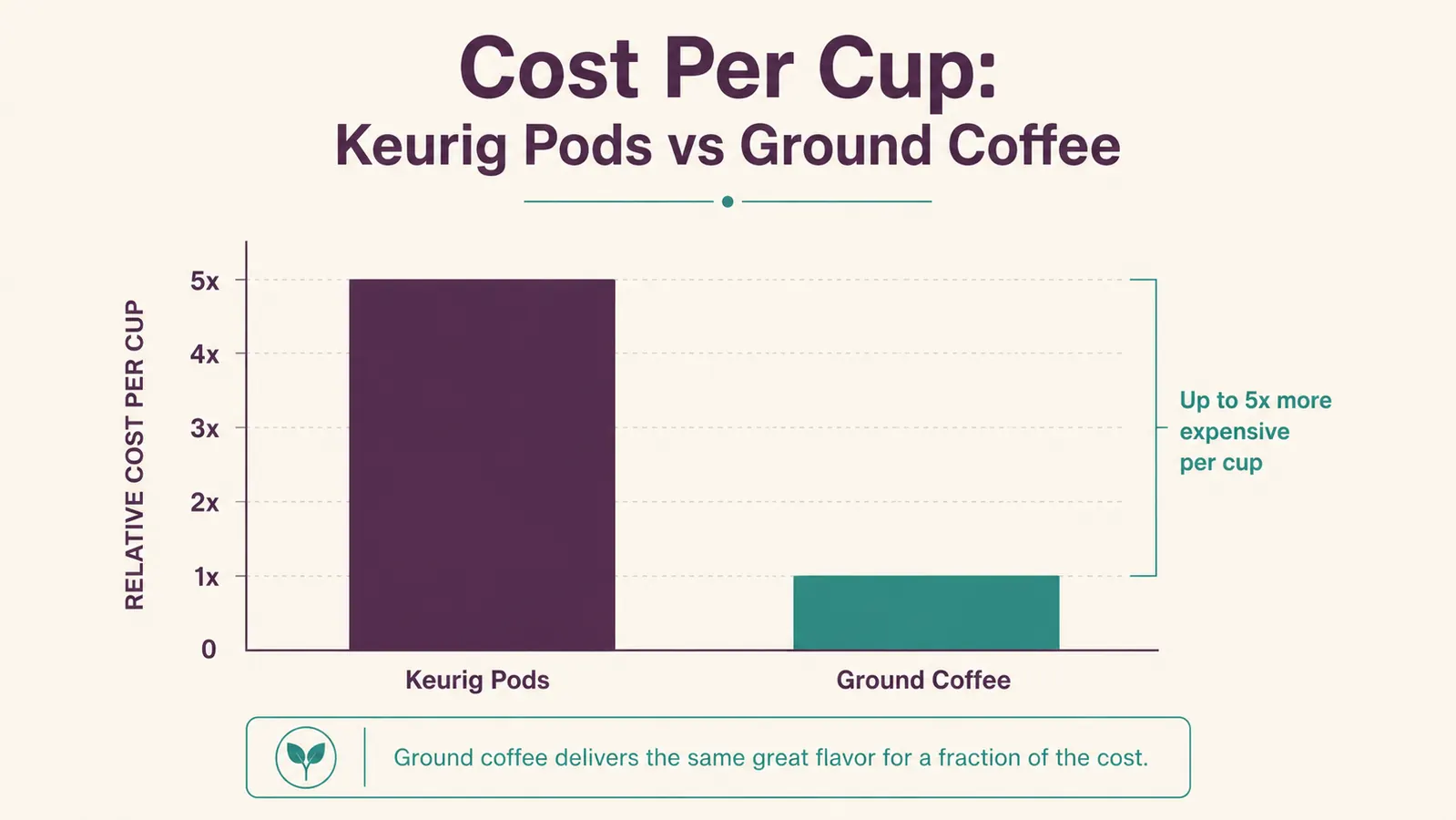
Here is the number that never shows up on the box: a K-Cup pod costs roughly two to three times what the same cup of coffee costs when it is brewed from a bag of ground coffee bought by the pound. That is not a hidden fee or a scam, it is just math nobody hands you at the point of purchase, when you are only thinking about the Keurig's price tag and not the years of pods that follow it. I did not do this math before I bought mine, and I wish I had, because it would not have changed my decision, but it would have changed my expectations.
The premium is easiest to justify if you are one or two people drinking a cup or two a day, which is exactly our household. It gets harder to justify fast if you are brewing for a family of four every morning, because the convenience tax scales with every extra cup, while a drip pot's cost per cup barely moves no matter how many mugs you fill from the same carafe. Anyone telling you the Keurig is cheaper in the long run than ground coffee is either not drinking coffee daily or not doing the math.
I also noticed the math shifts depending on which pods you buy. Store-brand and off-brand pods narrow the gap noticeably compared to name-brand roasts, and buying in bulk multi-packs narrows it further still. None of that erases the premium entirely, but if the cost is the part of this review that worries you most, that is the lever to pull before you write the Keurig off completely.
The Waste Question, and the Reusable Filter Workaround
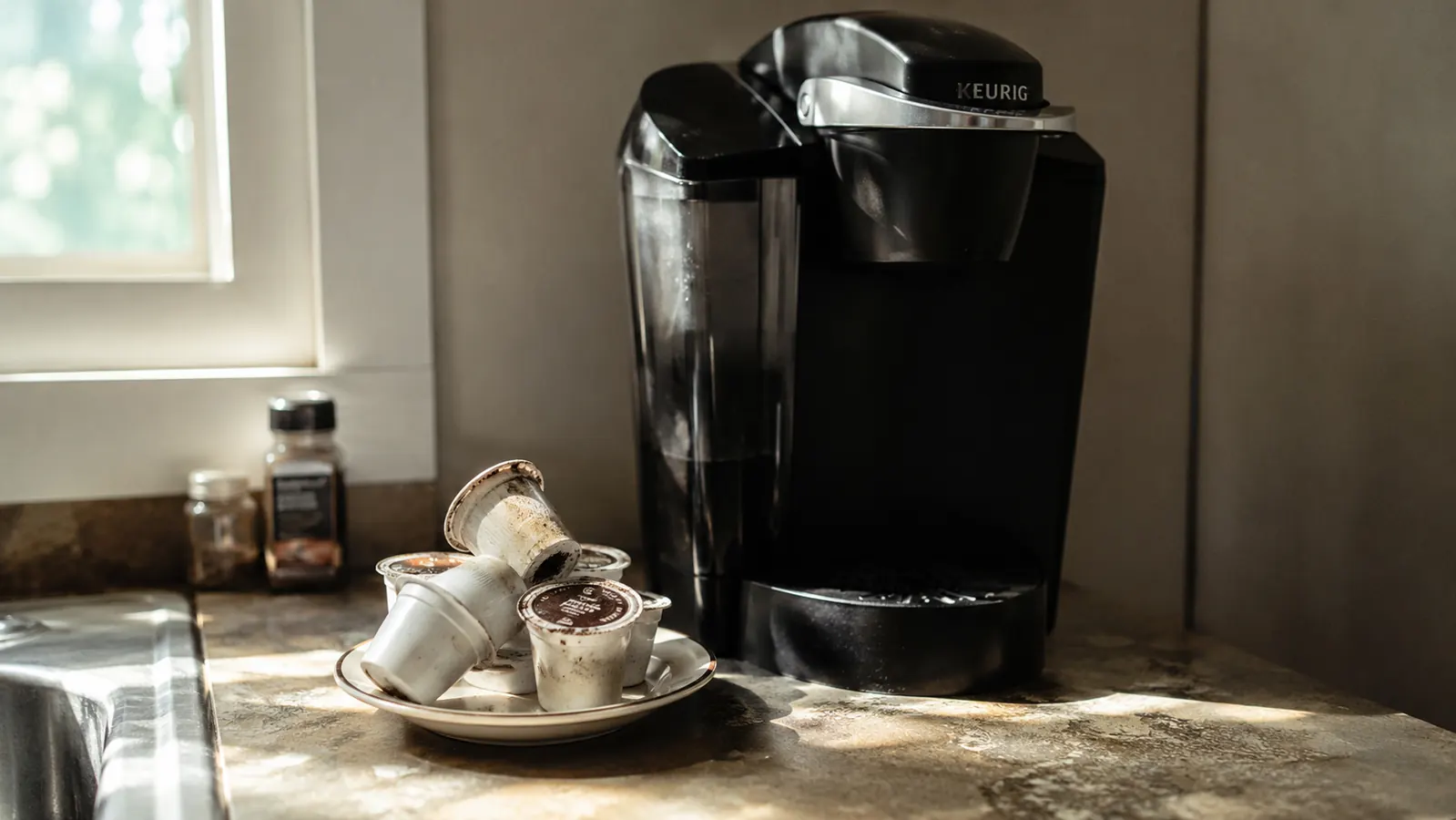
Nobody puts this on the box either: a single-serve pod machine means a single-use pod for every cup, and after a week of actually saving mine instead of tossing them straight into the trash, the pile on top of my fridge was bigger than I expected and a little embarrassing to look at. A drip pot generates a paper filter and some spent grounds. The Keurig generates a small sealed cup of plastic or aluminum and grounds and a foil lid, one for every single serving, every single day, for as long as you own the machine. That adds up in a way the convenience conveniently lets you not think about.
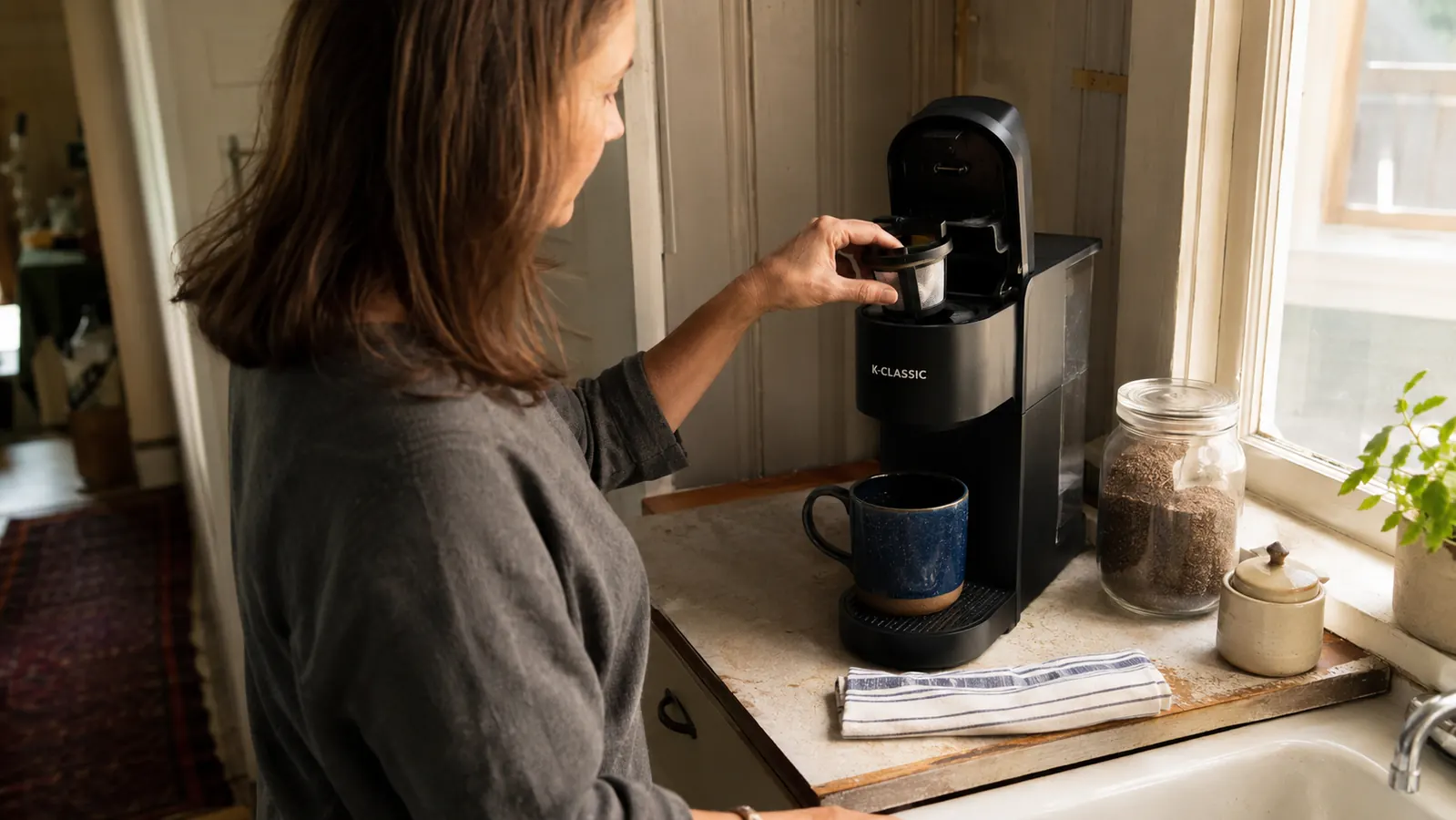
The workaround is a reusable filter cup that fits in place of a disposable pod, and I switched to using mine for most weekday brews once I saw the pile on the fridge. It cuts the per-cup cost close to what ground coffee costs on its own, and it cuts the waste to just the spent grounds, which I compost instead of throwing out. The tradeoff is that it is one more thing to fill, tamp, and rinse instead of just dropping a sealed pod in and closing the lid, so it gives back some of the speed that is the whole reason to own a Keurig in the first place. If you want the exact grind and fill method that gets a reusable filter tasting close to a proper pod, I wrote up the specific steps that worked for me after a fair amount of trial and error.
I will be honest that I do not use the reusable filter every single day. On a slow Sunday I am happy to rinse and tamp grounds by hand. On a Tuesday when Paul and I are both trying to get out the door, I reach for the sealed pod without a second thought and accept the extra cost as the price of not thinking about it. Knowing that about myself before you buy is more useful than any promise that you will always choose the greener option once you own one.

The Taste Ceiling: What a Pod Machine Will Never Quite Do
A K-Cup holds a fixed, small amount of ground coffee, sealed at the factory, and the Keurig cannot change that no matter which brew size you pick. Push more water through a fixed amount of grounds and you dilute the cup, you do not strengthen it. That is a hard ceiling, not a setting you can tune around, and it is the single biggest reason a pod machine will never quite match what a French press or a properly dialed-in drip pot can do with the same beans. Paul confirmed it within his first cup. He drinks his coffee strong enough that the standard-strength pods tasted thin to him even at the smallest brew size, and he switched to bold roast pods exclusively within the first week and still noticed the difference against his old method.
For a casual drinker who wants something hot and reasonably good without thinking about it, this ceiling barely registers, and most mornings I do not think about it either. But if you already know you like your coffee strong, dark, and full-bodied, you should walk into a Keurig purchase knowing you are trading some of that ceiling away for speed and convenience, not discovering it three weeks in the way Paul basically did at our own kitchen counter.
The honest comparison point is not the Keurig against a bad cup of gas station coffee, where it wins easily every time. The honest comparison is the Keurig against a French press made with the same beans, and on that comparison the press wins on flavor almost every time, because it extracts more from the grounds than a fast pressurized pod cycle ever will. What the Keurig wins back is everything the press cannot offer, speed, consistency, and zero cleanup, and for most weekday mornings that trade is the one I would still make.
The Maintenance Nobody Mentions at Checkout
A Keurig is not a set-it-and-forget-it appliance the way the ads make it look. Mineral buildup from tap water collects inside the machine over time, and by around the four-month mark of regular daily use, ours needed a full descaling cycle before brew times and water flow went back to normal. Nobody mentions this step when you are standing in the aisle deciding between machines, and it genuinely surprised me the first time performance started slipping, because I assumed a machine this simple would just keep working the same way forever.
It is not just the one big descaling either. The pod needle wants an occasional wipe if you want a clean puncture every time, the drip tray collects grounds and residue that are easy to forget about until they smell, and the reservoir lid is a magnet for a thin film if you go too long without rinsing it. None of it is difficult on its own, but stacked together it is a recurring maintenance habit the marketing never brings up, and skipping it is exactly how a Keurig ends up sluggish, loud, or tasting off after a few months of ownership.
None of this is a dealbreaker on its own, but taken together it means the Keurig asks more of you over its lifetime than the single button on the front suggests. Budget fifteen or twenty minutes every few weeks for the small stuff and a full descaling cycle a few times a year, and the machine keeps performing the way it did on day one. Skip all of it and you will eventually get a slower, louder, less reliable cup, and you will not be able to say nobody warned you.
What I Liked
- Genuinely faster than any pot-based method for a single cup, no debate there
- No mess to clean beyond a used pod and a rinsed mug on a normal day
- A reusable filter cup meaningfully closes the cost and waste gap if you use it
- Consistent hot output every time, no learning curve required to get a decent cup
Where It Falls Short
- Costs two to three times more per cup than ground coffee, no matter how you slice it
- Generates real single-use waste unless you commit to a reusable filter
- Bigger brew sizes dilute the coffee rather than making it stronger
- Needs recurring maintenance the box never mentions, not just a one-time chore
The Keurig never once lied to me about what it is. It just let the marketing leave out the parts I had to learn on my own.
Who This Is For
If speed and low daily effort matter more to you than squeezing the lowest possible cost or the strongest possible cup out of your coffee, the Keurig K-Classic earns its keep honestly. It is also a genuinely good fit for a household where people drink different roasts or different strengths, since nobody has to fight over a shared pot or waste half of one. For a fuller list of the specific mornings where that speed actually pays off, I laid out ten concrete reasons it simplifies a rushed morning in more detail elsewhere, including a few situations that surprised me.
Who Should Skip It
Skip the Keurig if you already know you like your coffee dark, strong, and in a large mug, the way Paul does, because the dilution problem at the bigger brew sizes will bother you the same way it bothered him. Skip it too if the ongoing cost per cup genuinely matters to your budget and you are brewing for more than one or two people every single day, since that premium only gets more expensive as the household grows. And skip it if a pile of used pods on your counter, even a small one, is going to bother you more than it is worth the time it saves, because that waste is real and it does not go away just because the machine is fast. A pour-over or a well-used French press will serve any of those three people better than a Keurig ever will.
Know the tradeoffs going in, and the Keurig still earns a spot on most counters.
If the speed and consistency are worth the cost per cup and the extra maintenance, check the Keurig K-Classic's current price and availability on Amazon.
Amazon Check Today's Price on Amazon →