

Before you buy an Instant Pot Duo, here's what none of the glossy listing photos will tell you: the first two weeks are genuinely annoying. I've already written about the beans and the Sunday broth and everything that's gone right since I dragged mine out of the hall closet six months ago. This is the other half of that story, the part where I was standing over the counter at nine at night wondering if I'd bought a problem instead of a shortcut.
I'm not walking anything back. I still use the Instant Pot most weeks. But an honest review has to include the stuff that would have changed how I planned that first month, and the stuff that still occasionally makes me wish I'd just used a skillet. So here's the version I didn't put in the six-month review.
The Quick Verdict
A genuinely capable pressure cooker with a real learning curve and an overclaimed feature list, worth it once you know exactly what you're getting into.
Amazon Check Today's Price →Thinking about buying one? Read this before your card is out.
The Instant Pot Duo is worth owning for the right kind of cook, but it rewards patience in the first month more than instant results. Check today's price and current availability before you decide.
Amazon Check Today's Price on Amazon →The Learning Curve Nobody Mentions in the Reviews
My first real attempt with the Instant Pot was a pot of chili, and I burned the bottom badly enough to trip the Burn notice twice before I figured out the problem: I hadn't deglazed the pot after browning the beef, and the tomato paste stuck to the steel and scorched the second the unit came up to pressure. Nobody selling the Instant Pot Duo mentions that the sauté function has a habit of leaving fond on the bottom that you have to scrape up with liquid before you seal the lid, or you're cleaning burnt sugar off steel instead of eating dinner.
The lid itself took longer to trust than I expected. Twice in my first two weeks I got a thin hiss of steam escaping from the edge of the lid instead of a clean seal, because the sealing ring wasn't fully seated in its rack. It's not dangerous, the Instant Pot just won't build pressure and you sit there watching the display do nothing while dinner gets later. I know now to run a finger around the ring before every lock. Nobody told me to check that in the first two weeks, and I wasted two dinners finding it out myself.
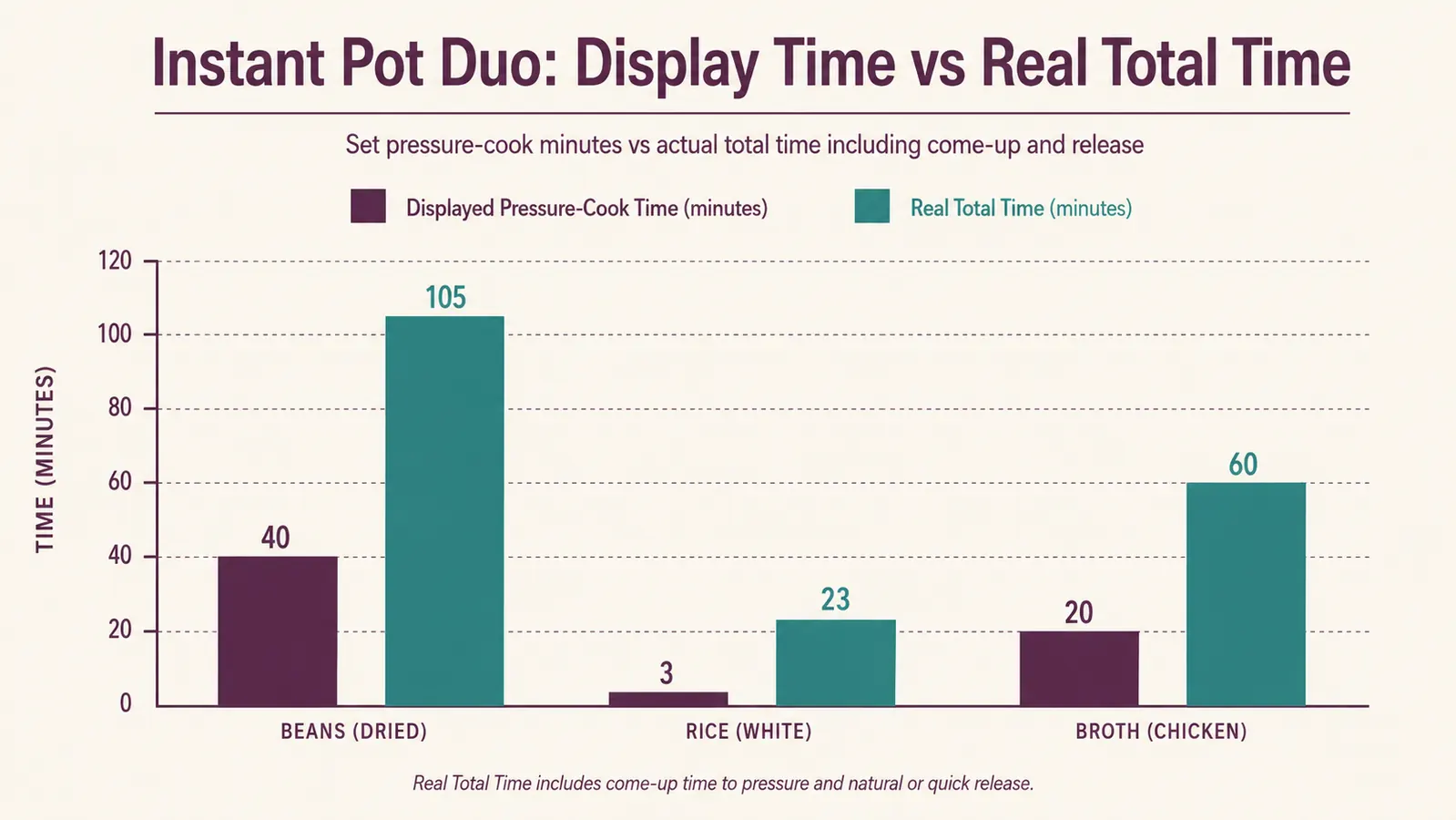
Then there's the timing confusion, which is the thing that trips up almost everyone new to the Instant Pot Duo. The number you set is only the pressure cook time, not the total time. It takes a good ten to fifteen minutes just to come up to pressure before that countdown even starts, and depending on the recipe, another ten to twenty minutes to release afterward. My first few dinners ran forty minutes later than I'd planned because I was mentally scheduling around the number on the display instead of the real total. That gap between the marketed cook time and the actual dinner-on-the-table time is the single biggest thing I wish someone had spelled out before I bought it.
Old family recipes gave me the most trouble, because none of them were written for a pressure cooker. My grandmother's pot roast recipe, the one built around a slow simmer on the stovetop, needed real trial and error to convert, not a simple guess at cutting the time in half. I ruined a chuck roast trying to eyeball the liquid amount before I found a proper conversion chart online, and it came out dry on top and swimming on the bottom because I hadn't adjusted the liquid the way the Instant Pot actually needs.
The Three Functions I Actually Use, and the Four I Basically Don't
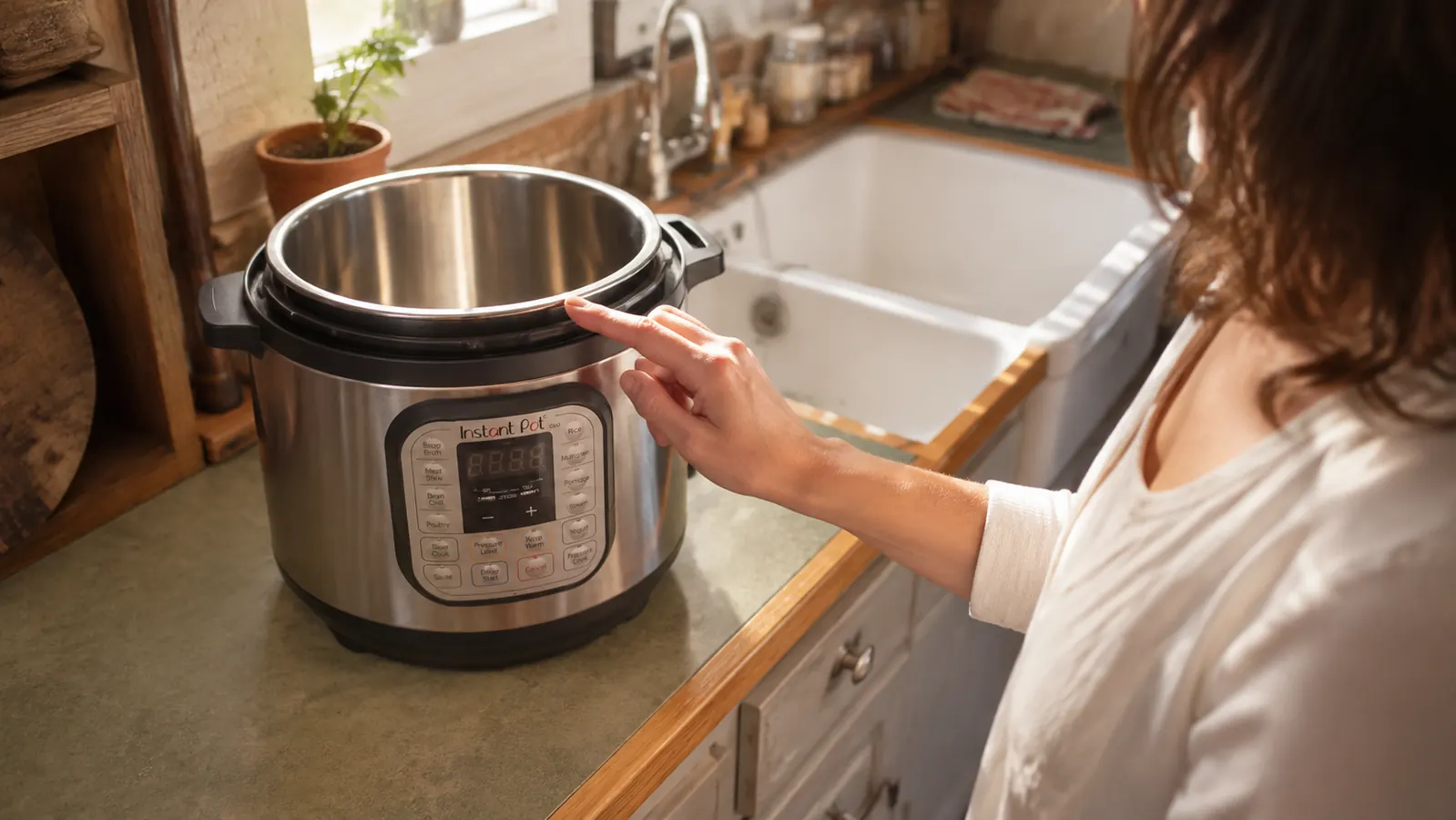
The Instant Pot Duo is marketed as a 7-in-1, and technically it is: pressure cooker, slow cooker, rice cooker, steamer, sauté pan, yogurt maker, warmer, plus a sterilizer function on top of that. In six months, I've used exactly three of those on a regular basis. Pressure cook, sauté, and rice are in near-constant rotation, and if you'd asked me before I bought it, I'd have assumed that was the whole point of owning one anyway.
The steam function gets used occasionally, mostly for eggs and vegetables when I want something quick that isn't swimming in butter. That's a real function I'd miss. But yogurt, warmer, and the sterilizer setting are functions I could delete from the control panel tomorrow and not notice. I've made yogurt maybe three times total, because committing eight hours of counter space I don't have on my twenty-two inches beside the sink is a bigger ask than the marketing photos suggest. I have never once used the sterilizer function on purpose.
None of that makes the Instant Pot Duo a bad appliance. It makes the number on the box a little dishonest. If you're buying it because you specifically want a yogurt maker or a warmer, you'll probably be fine, but you should know going in that the real everyday value is closer to a 3-in-1 with a couple of nice extras attached. If you want the practical, day-to-day version of that math laid out, I've written a full breakdown of where the Instant Pot Duo actually saves you time function by function, not category by category.
Where the Instant Pot Duo Is Actually the Wrong Tool
Nobody selling a pressure cooker wants to tell you when not to use it, so I will. If Paul and I just want scrambled eggs and toast, or we're reheating leftovers from the fridge, the Instant Pot Duo is the wrong tool every time. The come-up time alone means a stovetop pan or the microwave gets food on the table faster, and pulling a 6-quart pressure cooker off the hall closet shelf for a ten-minute meal is more effort than the meal deserves.
It's also the wrong choice for anything where a browned, crisp exterior matters more than the interior being cooked through. A roast that needs a proper crust, or chicken thighs with genuinely crispy skin, comes out better in the oven or under the broiler. The Instant Pot's sauté function can get you partway there before you seal the lid, but the moist heat of pressure cooking undoes a crisp surface fast. I learned this after a pork shoulder came out fall-apart tender and completely pale, which was fine for pulled pork and would have been a disappointment for anything I wanted to look good on a plate.
And for one or two small portions, the math just doesn't work in the Instant Pot's favor. The pot needs a minimum amount of liquid to build pressure regardless of how little food is actually in it, so a single portion of rice or a small side dish costs almost the same setup and cleanup time as a full batch. On nights I only need a cup of rice for one person, I'm back on the stovetop, because scaling the Instant Pot down that far stops being worth the extra pot to wash.

The Steam Problem Nobody Mentions
The steam release valve on the Instant Pot Duo vents straight up, which is fine if you have open air above your counter. In a 1940s duplex kitchen with a cabinet mounted low over that stretch of counter, it isn't. The first time I ran a full pressure release instead of letting it vent naturally, a visible cloud of steam hit the bottom of the cabinet above the unit and left a damp patch that took a day to fully dry.
I've since started sliding the Instant Pot Duo forward on the counter, closer to the edge, whenever I know I'll need a quick release, and I keep a dish towel folded on the shelf above just in case. It's a minor fix, but it's exactly the kind of thing that never shows up in a product photo shot in a wide-open showroom kitchen, and it's worth knowing if your own cabinets sit anywhere close to where the pot will actually live.
The noise of that release surprised me too. It's not painfully loud, but it's a sharp, sustained hiss that carries through a small duplex. Paul can hear it clearly from the living room with the television on, and the first time it happened he came into the kitchen assuming something had gone wrong. It hasn't, that's just what a quick release sounds like, but it's worth knowing before the first time it startles you or a guest.
What I Wish Someone Had Told Me Before I Bought It
If I could go back to the week before I bought the Instant Pot Duo, I'd tell myself to order a second sealing ring at the same time, not wait for the smell problem to force the issue. The ring holds onto strong flavors, garlic and curry especially, and if you cook anything savory one night and something mild the next morning, you'll taste it. Buying a spare on day one instead of scrambling for one later would have saved me a couple of ruined breakfasts.
I'd also tell myself to expect a real adjustment period, not an instant one. Every recipe converted from a slow cooker or a stovetop needs a different amount of liquid and a different sense of timing, and the first month is genuinely trial and error. If you're the kind of cook who wants to open the box and have dinner on the table perfectly on the first try, budget for a few misses before the Instant Pot Duo starts to feel intuitive. I've since put together a practical walkthrough of how I actually meal prep with it week to week, which is the guide I wish I'd had that first month instead of learning it recipe by recipe.
And altitude matters more than the manual makes it sound. I'm not at elevation myself, so it wasn't my problem, but I've heard from readers in mountain towns who struggled with undercooked beans for weeks before realizing their altitude meant longer cook times than any of the standard charts listed. If you live somewhere with real elevation, read that section of the manual before your first attempt, not after your third failed one.
What I Liked
- The three functions I actually use, pressure cook, sauté, and rice, are genuinely excellent
- Once you learn the timing, weeknight dinners really do move faster
- Even the burnt-chili learning curve was a one-time cost, not a recurring one
- Mechanically reliable once you know how to seat the sealing ring correctly
- Meal prep for the week gets dramatically easier once the routine clicks
Where It Falls Short
- The '7-in-1' branding oversells four functions most people barely touch
- Real total cook time, including come-up and release, is longer than the display number suggests
- Steam venting straight up can leave condensation on low overhead cabinets, and the release is loud
- First month has a genuine learning curve, not an intuitive one out of the box
- Wrong tool for single portions, quick reheats, or anything that needs a crisp exterior
It's not that the Instant Pot Duo lied to me. It's that nobody mentioned the first month would feel like homework before it felt like a shortcut.
Who This Is For
The Instant Pot Duo is for someone who cooks real dinners often enough to justify a learning curve, and who's willing to be a little patient in the first few weeks before it pays off. If beans, grains, broth, or braises are already a regular part of your rotation, the investment in learning the Instant Pot's timing quirks is worth it fast. Once you've got a rhythm going, the routine gets genuinely easy to repeat.
It's also worth it for someone in a small kitchen who's willing to trade counter space for time back on a weeknight, even with all the friction I've described here. I'm still glad I made room for the Instant Pot on my twenty-two inches, but I got there slower and messier than the marketing suggested I would, and that gap between expectation and reality is exactly what this review is trying to close for the next person.
Who Should Skip It
Skip it if you mostly cook for one, reheat leftovers more than you cook from scratch, or want an appliance that performs perfectly the first time you use it. The Instant Pot Duo rewards repetition and batch cooking, and it punishes impatience, both with the learning curve and with the natural release times that can't be rushed without losing food quality.
I'd also skip it if you were sold specifically on the yogurt maker or the sterilizer function as a selling point, because in six months of ownership those are the two functions I've barely touched. Buy it for the pressure cooking, the sauté, and the rice, because that's genuinely where the value lives, not the number on the box.
Still deciding if the learning curve is worth it?
For the right kind of cook, the Instant Pot Duo earns back the first month's patience many times over. See today's price and current availability on Amazon before you make the call.
Amazon Check Today's Price on Amazon →