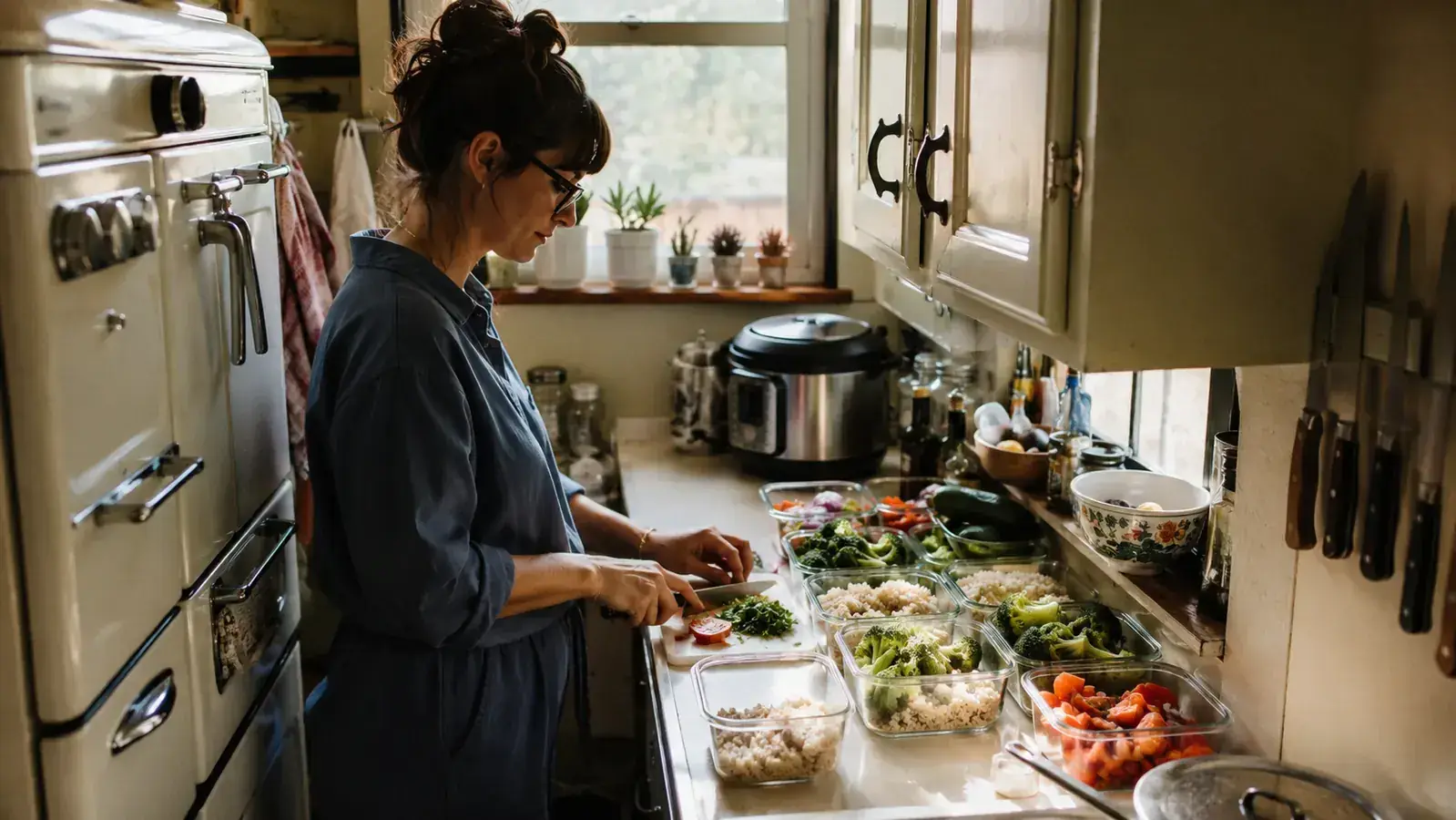
Sunday afternoon is the only real window I have to cook for the whole week, and for a long time I wasted most of it standing at the stove watching one pot at a time. The Instant Pot Duo changed that math, not because it's faster at any single task, but because it's the one appliance on my twenty-two inches of counter that can run unattended long enough for me to get two other things done in the time it used to take me to finish one. This is the actual sequence Paul and I use most Sundays, worked out over enough rushed, half-finished attempts that I finally wrote it down so I'd stop relearning it every week.
Meal prepping for two people in a kitchen this size means you can't lay out ten containers and three cutting boards at once. There's room for maybe two containers and one board before something starts sliding toward the sink. So the sequence below isn't about doing everything at the same time, it's about staging around the Instant Pot: cook the thing that takes longest first, then use that stretch of unattended pressure time to prep whatever's next on the one clear patch of counter I've got. By the end of a single afternoon, usually about two and a half hours including cleanup, we've got four to five weeknight dinners built, portioned, and either in the fridge or the freezer.
Tired of Sunday turning into a four-hour cooking marathon?
The Instant Pot Duo is the one appliance that can pressure cook a protein unattended while you prep the next component on the counter. See today's price and current availability before you plan next week's prep.
Amazon Check Today's Price on Amazon →Step 1: Pick Two Bases, Not Five Meals
The mistake I made for months was planning five separate recipes and trying to prep all five in one afternoon. It never worked, because each one wanted a different pan, a different seasoning path, and a different amount of my attention. What actually works is picking two bases, usually one protein and one grain or bean, and building four or five dinners out of remixing them. A batch of shredded chicken thighs and a pot of brown rice becomes chicken and rice bowls on Monday, chicken tacos on Tuesday with the same shredded meat and a different spice rub stirred in cold, and a quick chicken soup on Wednesday using the last of both plus whatever broth is in the freezer.
This matters more in a small kitchen than it would in a bigger one. I don't have pantry space for five different sets of specialty ingredients, and I don't have hall closet room to store five single-use appliances I'd need to pull off the shelf to make them. Two bases cooked in the Instant Pot Duo, remixed with sauces, spices, and whatever vegetables are about to turn, covers a full week without me needing anything I don't already have on hand. For more on how this cuts actual time off a weeknight, I've laid out the specifics in ten reasons the Instant Pot Duo saves dinner time.
Step 2: Scale the Quantities for Two People, Not Four
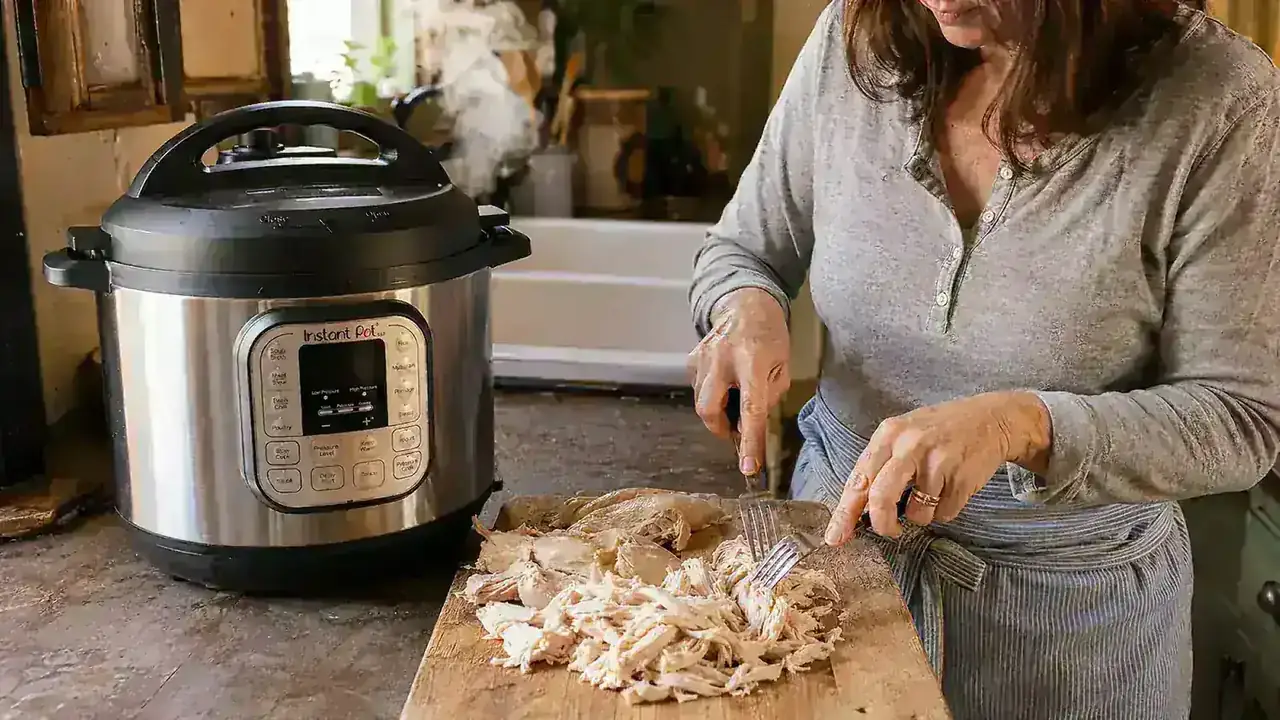
Most recipes and most meal-prep advice online are written for a family of four, and if you cook straight from those quantities with just two people at the table, you'll end up with a fridge full of food nobody's eating by Thursday. For Paul and me, 1.5 pounds of boneless, skinless chicken thighs is the number that works: it yields enough shredded meat for three full dinners plus one lunch, without leftovers going stale in the back of the fridge. If we're planning a bean-based week instead of chicken, I'll sometimes cook a half batch first just to test a new spice blend, since dried beans are cheap but a whole pound nobody ends up liking is still a wasted afternoon.
On the grain side, one cup of dry rice cooked in the Instant Pot comes out to roughly three cups cooked, which covers four to five servings depending on how much we're piling onto each bowl. If beans are the base that week instead, one cup of dried pinto or black beans, no soaking required, yields about three cups cooked, which is the same rough math. I write these two numbers on a sticky note inside the cabinet so I stop guessing every single Sunday.
Step 3: Brown, Then Pressure Cook the Protein First
The protein goes into the Instant Pot Duo first, always, because it takes the longest and because the sauté step means I'm not dirtying a second pan before it even starts. For the chicken thighs, I brown them in batches on the sauté setting with a little oil, about three minutes a side, just enough color to build flavor, then add a cup of broth, lock the lid, and set it to manual, high pressure, for 10 minutes.
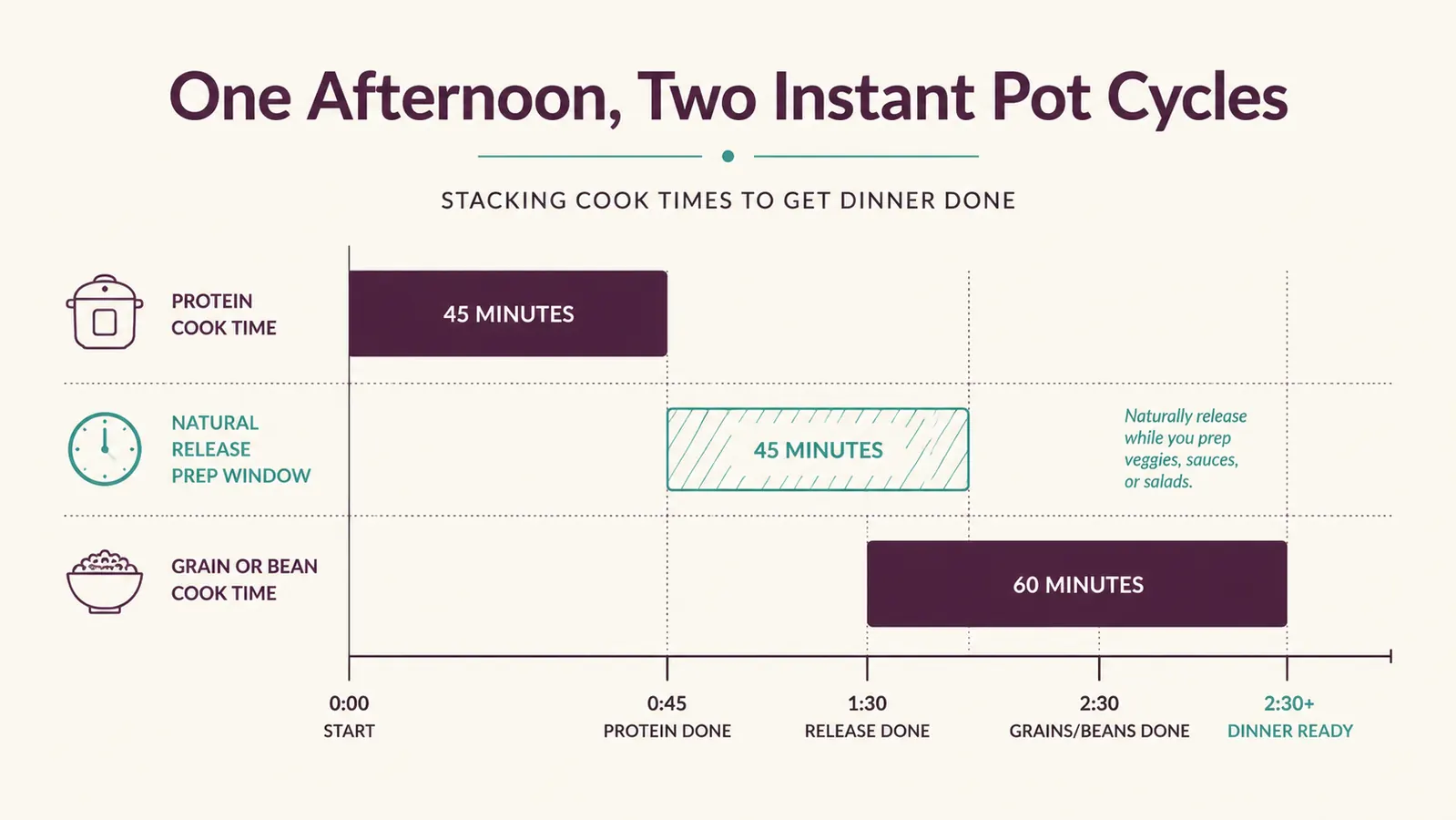
For a tougher cut, like a 2-pound pork shoulder for pulled pork, I brown it the same way, then pressure cook on high for 45 minutes with a natural release. That's a much bigger stretch of unattended time, which sounds like a wait, but it's actually the most useful part of the whole afternoon, because it's when everything else gets done.
Step 4: Use the Natural Release Window to Prep Everything Else
Once the Instant Pot Duo comes up to pressure and starts its countdown, that's my signal to turn to whatever clear patch of the twenty-two inches I've got left. While the chicken cooks and then sits through its 10-minute natural release, I wash and chop whatever vegetables are going into the week's bowls, usually bell peppers, a bag of slaw mix, and whatever's closest to turning in the crisper drawer. If we're doing a sheet pan of roasted vegetables alongside, that goes into the oven during this same window, since the oven and the Instant Pot don't compete for counter space or the outlet cluster the way two countertop appliances would.
This is the part that actually saves the afternoon. I'm not standing over the Instant Pot waiting for it, I'm using its unattended time as my own second set of hands. By the time the pin drops and the lid unlocks, the vegetables are chopped, the containers are pulled out of the cabinet and wiped down, and I've usually already started the next thing.
Step 5: Cook the Grain or Beans While You Shred the Protein
With the chicken out and resting on a cutting board, I give the inner pot a quick rinse, no full wash needed since it's just broth residue, and start the second Instant Pot cook right away. Rice goes in at a 1:1 ratio with water, a pinch of salt, manual setting, high pressure, 4 minutes, followed by a quick release once it's done. Dried beans, if that's the base that week, go in with three cups of water per cup of beans, no soaking, manual high pressure for 35 to 40 minutes with a natural release.
While that second Instant Pot cycle runs, I shred the chicken with two forks right on the cutting board, which takes about five minutes for 1.5 pounds. This is the point in the afternoon where the counter is at its most crowded, cutting board, shredded chicken, chopped vegetables, and the pot still working, so this is exactly why I don't try to run a third task at the same time. Two things going at once, staggered, is the ceiling on twenty-two inches. I've tried running the oven, the sauté function, and shredding all at once, and it just means three half-finished tasks instead of two done ones. The Instant Pot Duo can hold food warm on its own once a cycle ends, which buys a few extra minutes if the counter gets backed up.
Step 6: Portion Into What You Actually Own
I don't buy special meal-prep containers. I portion into the same set of glass containers I already have, which means the real constraint isn't the recipe, it's how many containers fit in the fridge door shelf and how many I can fit on the counter at once to fill them. I fill two at a time, max, because that's what the strip of counter next to the Instant Pot can hold without something tipping into the sink.
A typical portion for one dinner is about 4 ounces of shredded chicken, three quarters of a cup of rice, and whatever vegetables round it out. I keep one container in the fridge for the next day or two, and the rest go straight into the freezer before they've had a chance to sit around and lose texture. If you want a fuller look at how these portions hold up over repeated use, the honest review of the Instant Pot Duo gets into what changes after months of this same routine. The other thing I've learned to respect is the outlet cluster: if the Instant Pot is still holding rice warm when I want to plug in the coffee maker for the next morning, one of them has to wait, so I try to finish the second cook before I start cleanup rather than letting it idle.
Step 7: Label, Date, and Know What Actually Freezes Well
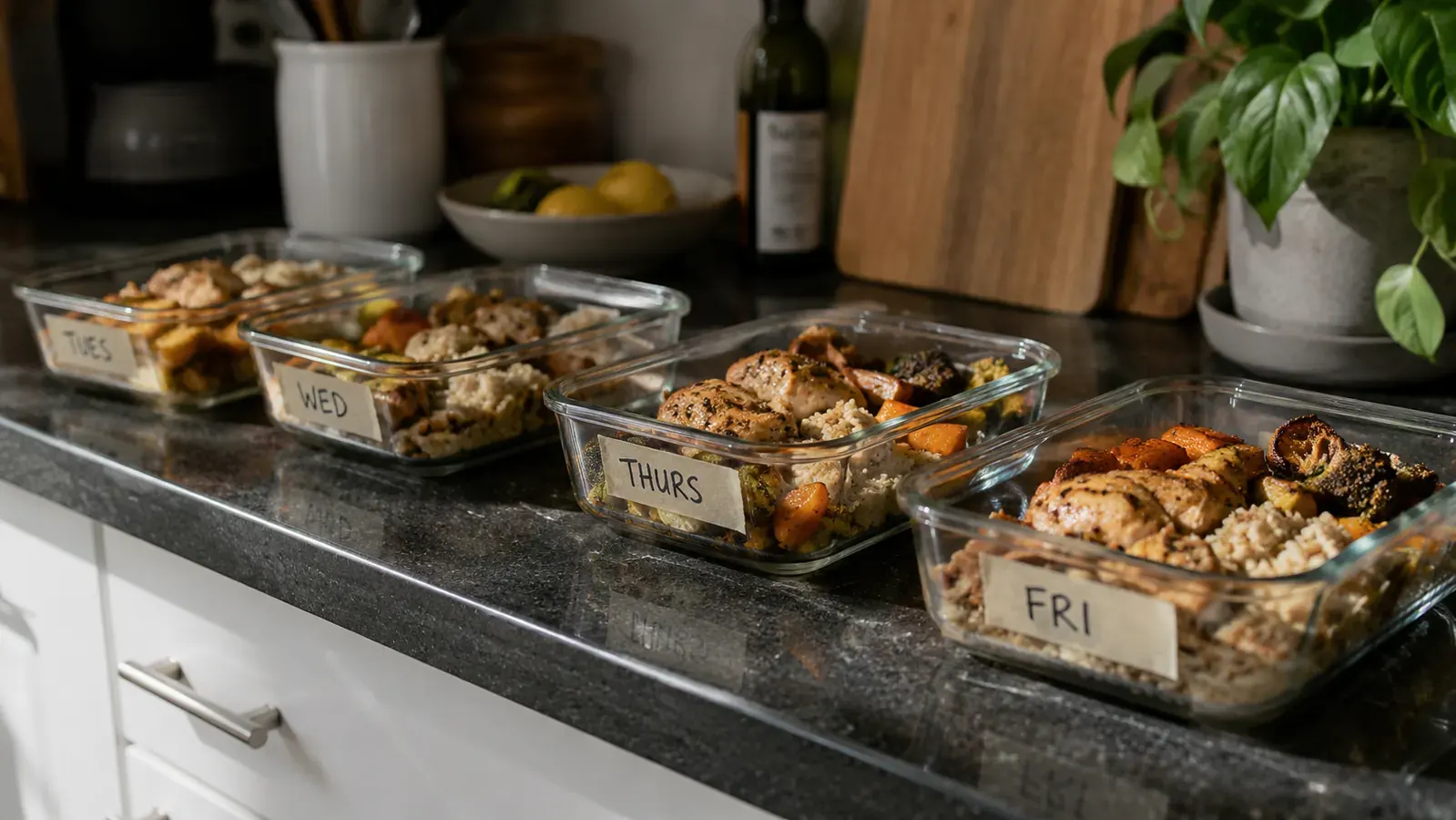
Every container gets a piece of masking tape with the contents and the date, because I've pulled too many mystery containers out of the freezer and had to guess. Shredded chicken and rice freeze well together for up to three months without much texture loss. Cooked beans freeze fine on their own for about the same window, but I keep them separate from any dairy-based sauce, since that tends to split when it thaws.
Anything going into the fridge instead of the freezer, I use within four days, which is usually the Monday-through-Thursday stretch before we're back to a fresh Sunday batch. The Instant Pot Duo doesn't change how long food keeps once it's cooked, that's just ordinary food safety, but it does mean I'm cooking in a single afternoon instead of four separate weeknights, which is the whole point of the exercise. I've also started freezing in flat, single-layer bags instead of stacked containers for anything beyond the first two weeks, since flat bags thaw faster on a night when I forgot to move something to the fridge the day before.
What Else Helps
A few small things have made this routine easier without adding more to store. A glass lid that fits the inner pot lets me hold cooked rice warm on the sauté setting without needing to seal and unseal the full pressure lid, which matters when the second cook is waiting on the first to clear the counter. Heat-resistant mitts long enough to clear the rim of the inner pot save me from juggling a hot, full pot with kitchen towels, which I did for the first few months and don't recommend. And keeping a running list on the fridge of which two bases we did last week keeps me from repeating the same chicken and rice bowls three Sundays in a row. None of this requires anything beyond the Instant Pot itself and containers you probably already own.
Meal prep in this kitchen was never about cooking more food. It was about making the Instant Pot do the waiting so I didn't have to.
Ready to trade four weeknight cooking sessions for one Sunday afternoon?
This whole sequence depends on having a pot that can pressure cook a protein unattended while you handle everything else. Check today's price and current availability on the Instant Pot Duo before you plan next week's prep.
Amazon Check Today's Price on Amazon →