
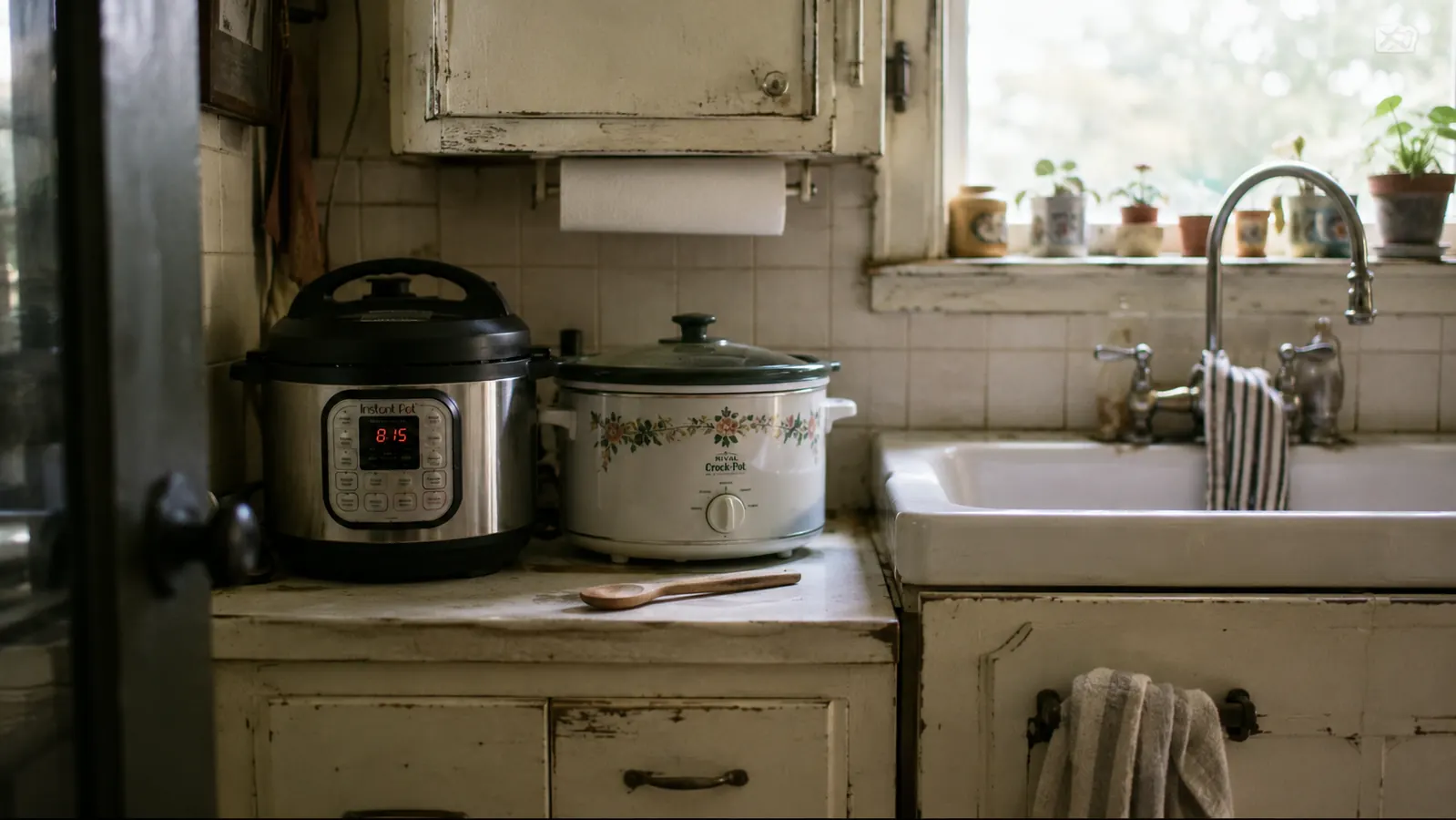
I own an Instant Pot Duo and I have used a Crock-Pot on and off for over a decade, so when people ask me which one to buy for a kitchen with no room for both, I do not dodge the question. The Instant Pot Duo is the one I would keep if I could only keep one appliance on my twenty-two inches of counter. It gets dinner on the table in under an hour more nights than not, and in a galley kitchen where every appliance competes for the same outlet cluster beside my sink, speed matters as much as flavor. That said, a classic Crock-Pot has not disappeared from my hall closet for a reason, and pretending it does not deserve a place in this conversation would not be honest. Plenty of people writing this comparison have never actually owned both, which is how you end up with a lopsided verdict that reads more like an ad than a real answer.
This comparison is not about which appliance is objectively better in a vacuum. It is about which one earns real estate on a strip of counter that cannot hold both, plugged into an outlet that already has a coffee maker and a toaster fighting for the same power strip. My husband Paul and I have run both machines through the same rotation of weeknight meals, from pulled pork to bean soup to a simple pot of chili, and the differences showed up fast: in how long dinner takes to plan for, how loud the kitchen gets, how much cleanup is waiting afterward, and how much I have to think about the appliance while it is running instead of walking away from it entirely.
| Feature | Instant Pot Duo 7-in-1 | Crock-Pot Slow Cooker |
|---|---|---|
| Typical Price | Higher upfront, in line with a multi-function cooker | Noticeably cheaper, one of the least expensive appliances you can buy |
| Cook Time for Pulled Pork | About 90 minutes on pressure cook | 7 to 8 hours on low |
| Noise While Running | A steady hiss during pressure release, audible across the kitchen | Nearly silent, just a faint simmer |
| Learning Curve | Takes a couple weeks to trust the pressure release timing | Load it, turn a dial, walk away |
| Built-In Functions | 7-in-1: pressure cook, slow cook, rice, steam, saute, yogurt, warmer | Slow cook only, some models add a warm setting |
| Cleanup | Steel insert plus a lid with a sealing ring and steam valve to wipe down | Stoneware insert wipes clean, no valve or ring to maintain |
| Safety Feel While Cooking | Locked lid and building pressure can feel intimidating at first | Nothing to lock or release, easy to check on partway through |
| Best For | Weeknights when dinner starts less than an hour before you eat | Mornings when you can load it before leaving for hours |
| Counter Behavior While Open | Needs clearance for the lid to rest while venting or serving | Lid lifts straight off with no extra clearance needed |
Where the Instant Pot Duo Wins
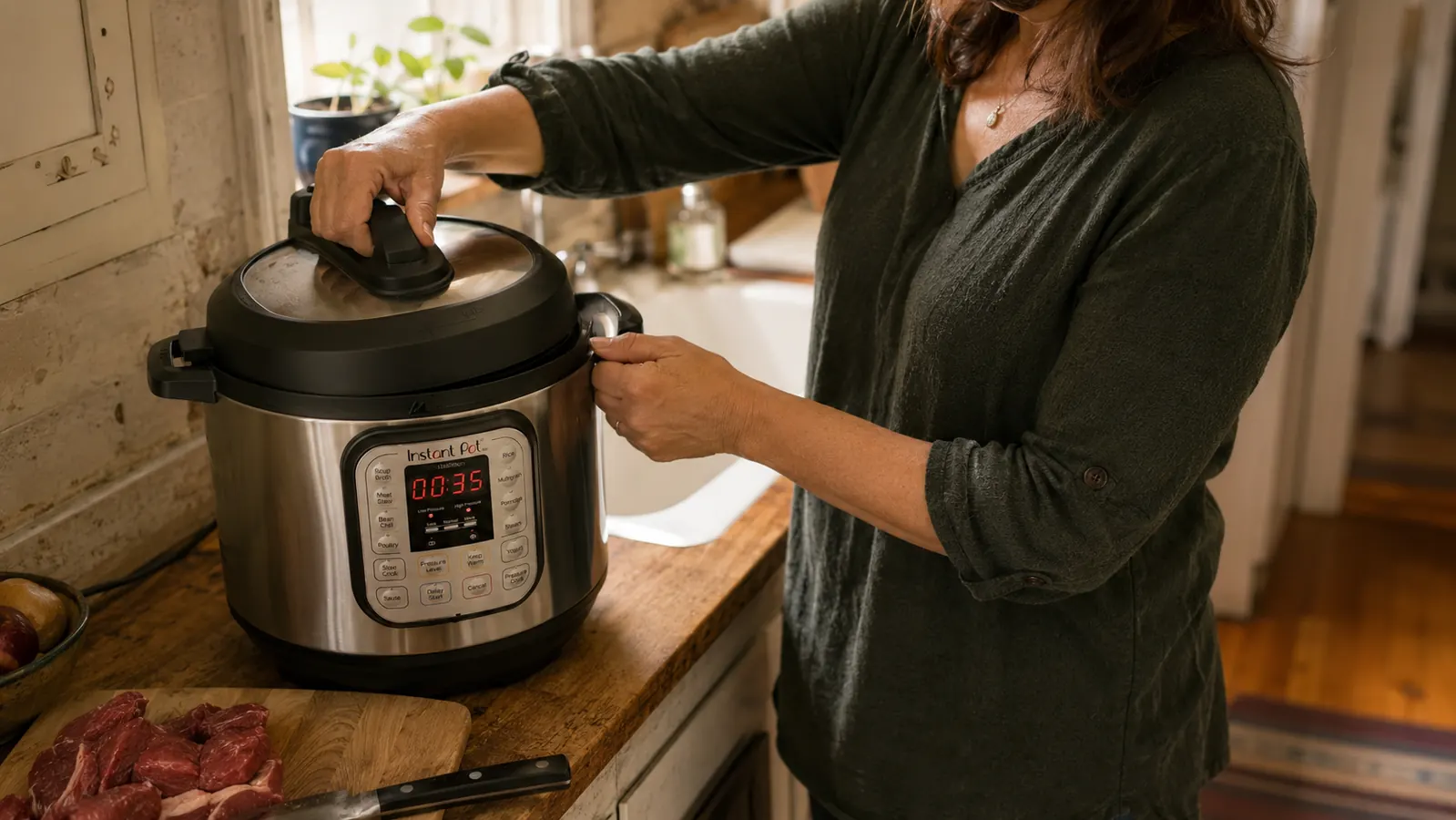
The single biggest reason the Instant Pot Duo wins this comparison for me is timing. A Crock-Pot needs six to eight hours of lead time I frequently do not have, especially on a Tuesday when I am still deciding what is for dinner at five thirty instead of at breakfast. The Instant Pot Duo turns the same cut of chuck roast, or the same pound of dried pinto beans, into dinner in under two hours, most of that unattended. If you want the more skeptical read on where it still falls short, I wrote a separate honest review of the Instant Pot Duo that does not pull punches on the sealing ring smell or the natural release wait.
It also does more with the same footprint. The Instant Pot Duo sautes onions and browns meat in the same steel insert before switching to pressure cook, so I am not dirtying a skillet and then transferring everything into a slow cooker crock. A Crock-Pot cannot brown anything, which means a lot of slow cooker recipes ask you to sear meat on the stove first anyway, adding a second pan to the sink before the slow cooking even starts. On a counter with only twenty-two inches to work with, one appliance that replaces two steps is worth more than one appliance that does a single step extremely well, no matter how well it does it.
The Instant Pot Duo also earns its keep outside of dinner. I use it for rice most weeknights, for hard boiled eggs that peel cleanly, and for steaming vegetables in a fraction of the time a stovetop steamer basket takes. A Crock-Pot cannot do any of that. It is built for one job, low and slow heat over hours, and it does that job well, but it cannot pull double duty the way the Instant Pot Duo does when Paul and I need breakfast, a side dish, and dinner out of the same piece of equipment on the same crowded strip of counter.
There is also a control angle worth naming. A Crock-Pot has one setting, low or high, and no way to intervene once it is running. The Instant Pot Duo lets me check the display, adjust the time mid-recipe, or switch from pressure cook to a saute finish to reduce a sauce at the end. That flexibility matters more than it sounds like it should on a night when a recipe does not go quite the way the box promised, and I need to fix it without starting over or reaching for a second pan I do not have room to wash.
Where the Crock-Pot Wins
None of that makes the Crock-Pot a bad appliance, and I want to be fair about where it still beats the Instant Pot Duo. A slow cooker is genuinely gentler on tough cuts of meat. Eight hours on low breaks down connective tissue in a way that a ninety minute pressure cook only approximates, and there are dishes, a pot roast with vegetables that have had all day to soften into the gravy, where the slow cooker's low heat produces a texture the Instant Pot Duo cannot fully match no matter how I adjust the release. If you have the hours to give it, that slow braise is real and it is better than anything I have managed to force out of a pressure cooker.
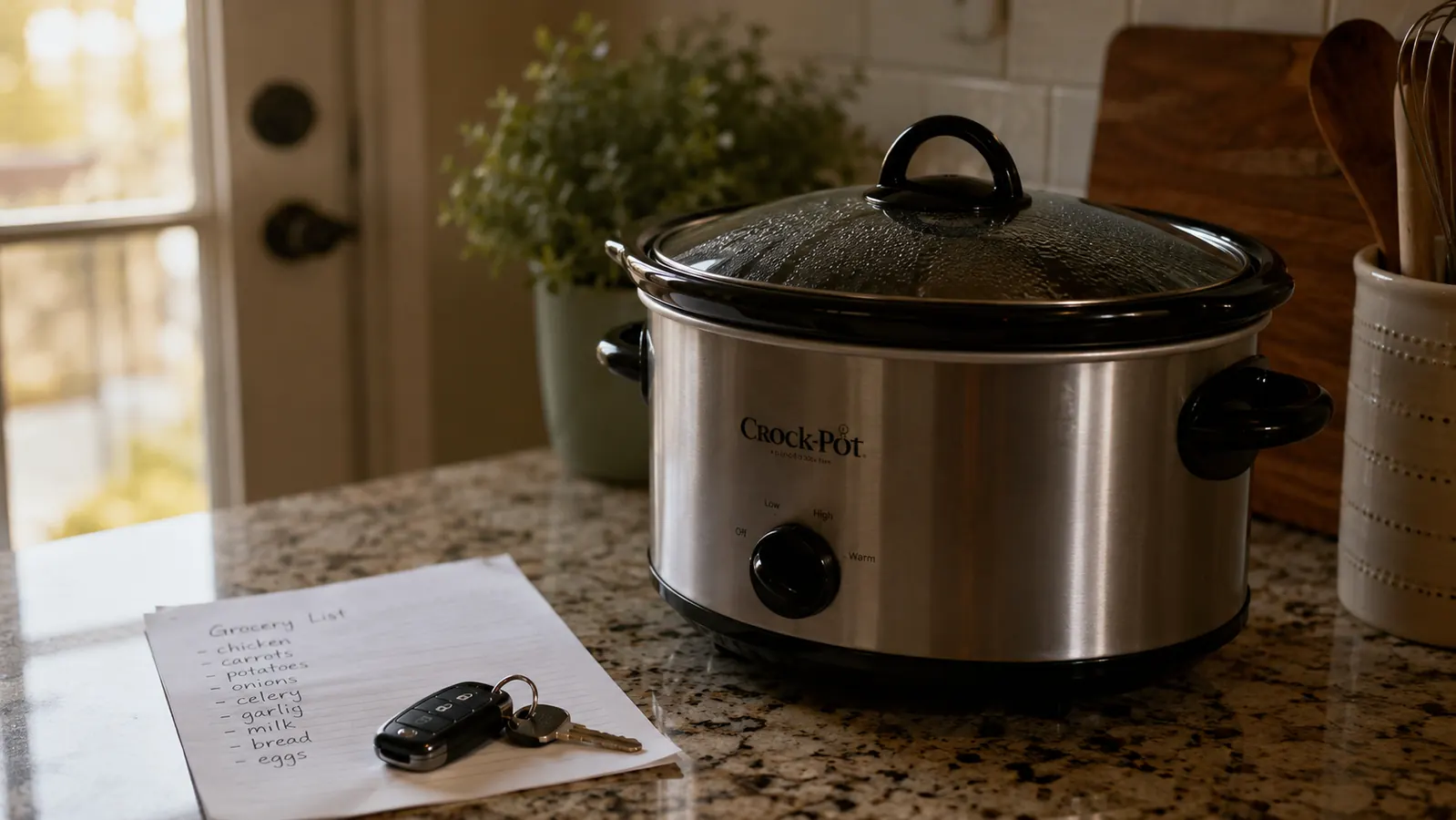
The Crock-Pot is also just simpler. There is no pressure to build, no valve to check, no sealing ring to smell like last week's curry. You load it, set the dial to low or high, and walk away without a second thought. That kind of foolproof simplicity has real value, especially for anyone who finds the Instant Pot Duo's pressure release timing stressful, or who wants to leave the house for the whole day without worrying about an appliance building steam while nobody is home to check on it. A basic Crock-Pot also costs a fraction of what the Instant Pot Duo runs, and it uses one dial instead of a control panel, which means less that can go wrong electronically over the years it sits on a shelf.
It is quieter too. The Instant Pot Duo hisses audibly during pressure release, sometimes loud enough that Paul asks what is wrong from the next room. A Crock-Pot just simmers, low and nearly silent, which matters more than I expected in a duplex with thin walls and a downstairs neighbor. Cleanup favors the Crock-Pot as well, since a stoneware insert wipes out in a sink that is barely wide enough for my dishes, without a lid full of small parts, a steam release valve, and a sealing ring that all need separate attention the way the Instant Pot Duo's do.
And if you already own a Crock-Pot that works, there is a case for not replacing it at all. An appliance that is paid off, that you already know how to use, and that has never once failed on you is worth more than a shinier upgrade with a learning curve attached. I would not tell someone with a perfectly good Crock-Pot to throw it out just because the Instant Pot Duo exists. The honest answer only changes once you are choosing between the two for the first time, or once your current slow cooker actually breaks.
A Crock-Pot does one thing beautifully. The Instant Pot Duo does that same thing well enough, plus five more things I actually needed this week.
Tired of starting dinner at 5:30 with nothing on the stove?
The Instant Pot Duo turns a cold start into a finished meal in under two hours, no eight-hour head start required. See today's price and current availability on Amazon.
Amazon Check Today's Price on Amazon →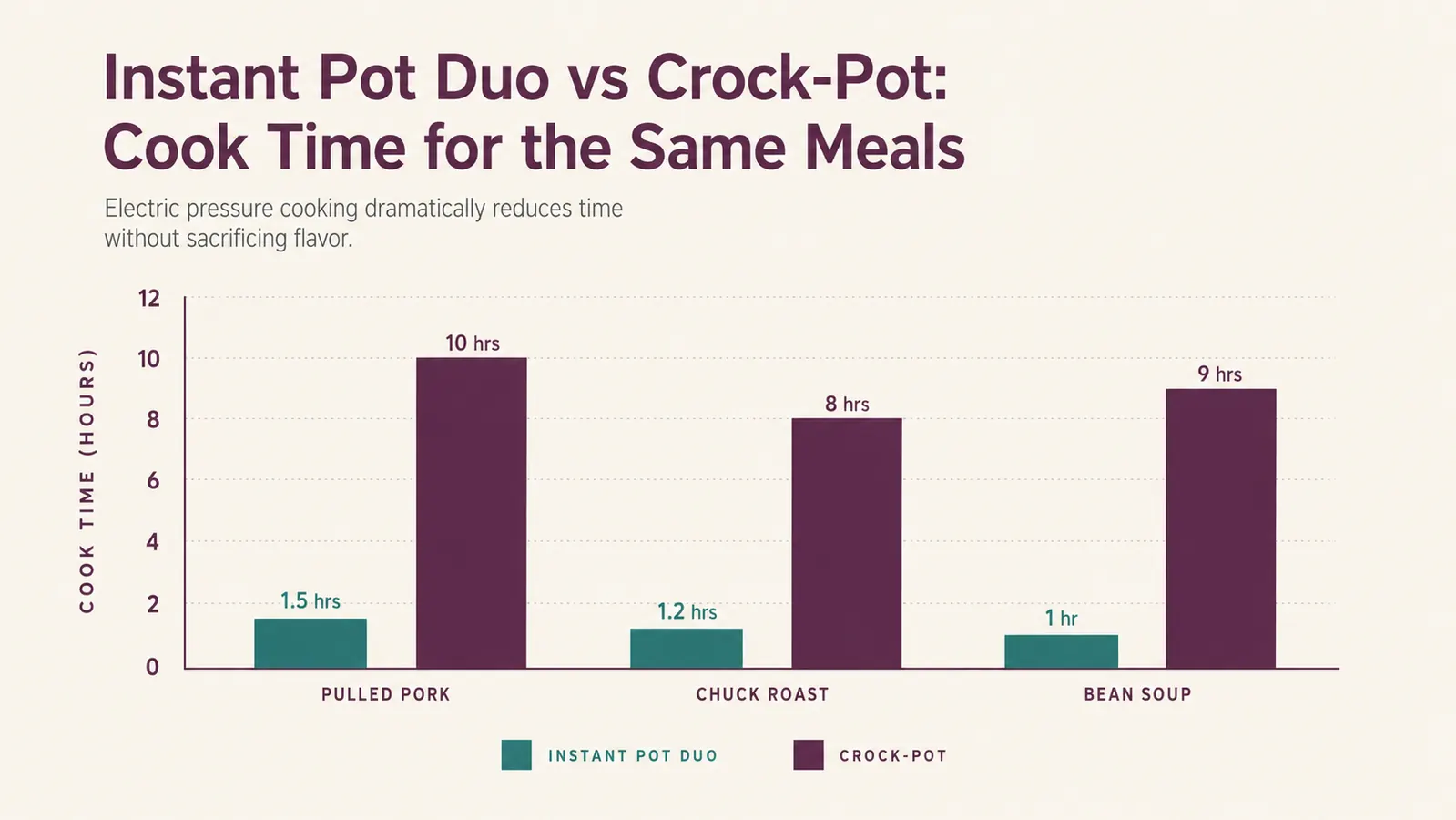
Who Should Buy Which
So which one should actually sit on your counter? If you have room and budget for both, keep both, they solve different problems and I would not talk you out of owning a Crock-Pot if it already lives in your kitchen. But most people looking at this comparison do not have room for both, and if I am being honest about my own twenty-two inches, that is the real question underneath all of this: which one appliance do you keep when you can only keep one. For me, and for most weeknight cooks juggling a job, dinner, and a kitchen too small to hold two large appliances, the Instant Pot Duo wins that trade because it absorbs more of the Crock-Pot's job than the reverse is true. It is not as gentle as an all-day braise, but it gets closer to slow cooked than a slow cooker gets to fast. I walk through exactly how that trade played out in my own kitchen in the full story of how the Instant Pot Duo actually earned its spot, if you want the longer version.
Buy the Crock-Pot instead, or alongside, if you have a genuinely separate slot for it, if you are regularly out of the house for eight or more hours and want dinner to build itself while you are gone, or if pressure cooking sounds like one more thing to learn on top of an already full week. It is also the better pick if what you are chasing is that specific all-day braised texture and you are not in a hurry on the night you cook it. Buy the Instant Pot Duo if your evenings run short, your counter runs shorter, and you would rather learn one appliance's quirks than manage two appliances' worth of storage, cords, and cleanup on a strip of counter that was never built for either one.
One appliance, not two, on twenty-two inches of counter
If you're choosing between a slow cooker and a pressure cooker for a small kitchen, the Instant Pot Duo covers more of what you actually cook in a week. Check today's price on Amazon before you decide.
Amazon Check Today's Price on Amazon →